Tuesday, March 1, 2016

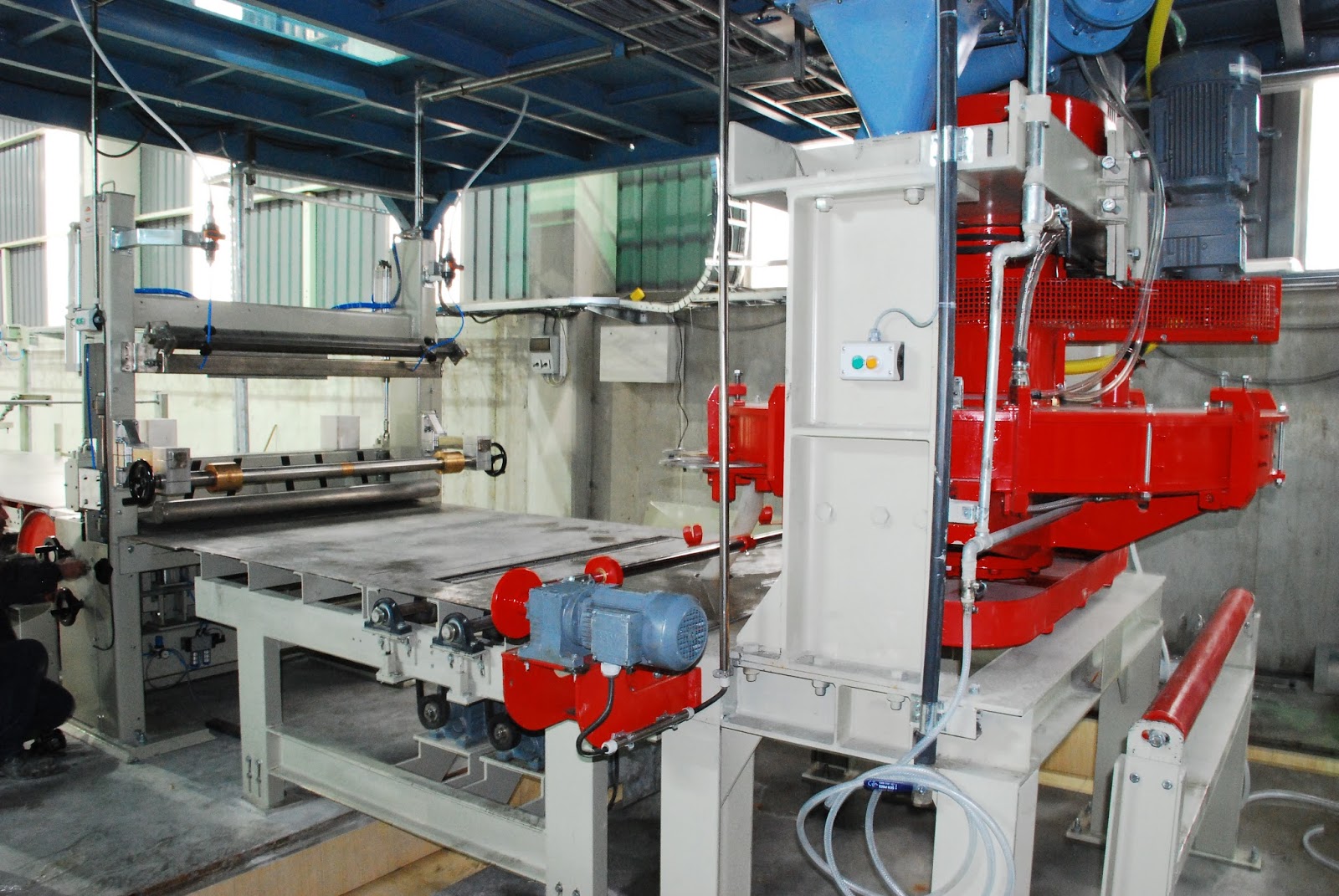
Calcining process in gypsum production


Calcining process is one of the main factors in the control of characteristics of produced product, because it affects plaster's quality.


Proven and time-tried systems, that are developed by our engineers, provide comprehensive solutions individually to meet our customers' all needs. 

Our specialists, with years of experience in gypsum production, will assist our customers to select the most suitable solution - optimal design and economical production cost.


Tuesday, February 16, 2016

Packing Unit for Plasterboard Production Line | Automatic Stacking & Bundling System


Learn how the packing unit works in a modern plasterboard production line. Discover automatic stacking tables, bundlers, transfer systems, forklift loading operations, and turnkey gypsum board plant engineering solutions by Plasterboard.biz


Modern plasterboard production lines require efficient and reliable packing systems in order to ensure smooth operation, product protection, warehouse efficiency, and shipment preparation. The Packing Unit is the final sections of a gypsum board manufacturing plant.
In a fully automatic plasterboard production line, gypsum boards exiting the Bundler Unit are transferred to the Stacking Table through synchronized transfer conveyors and handling systems. These transfer units are designed to transport plasterboards safely without damaging board edges or surfaces.
At the stacking table, plasterboards are precisely aligned by pneumatic positioning pistons. Accurate alignment is extremely important for stable pallet formation, safe transportation, and efficient warehouse storage.
The descending stacking table allows operators to adjust the number of boards in each stack according to production requirements, board thickness, customer demand, or transportation conditions. This adjustable system improves production flexibility and operational efficiency in modern drywall manufacturing plants.
After the stacking process is completed, the prepared plasterboard bundles are automatically moved to the forklift transfer table. From this point, forklift operators can easily transport the finished gypsum board stacks to the warehouse area or directly to the shipment section for customer delivery.
A well-designed packing unit provides several advantages in plasterboard manufacturing facilities:
Reduced manual handling 
Faster production flow 
Improved warehouse organization 
Lower risk of board damage 
Increased production efficiency 
Safer transportation and shipment preparation 
Better pallet stability and packaging quality 
At Plasterboard.biz, we provide engineering, consulting, modernization, and turnkey solutions for plasterboard production plants worldwide. Our expertise includes:
Complete plasterboard production lines 
Packing and stacking systems 
Automatic bundlers 
Transfer conveyors 
Production line modernization 
Factory refurbishment projects 
Capacity increase solutions 
Engineering consultancy for new investors 
Whether you are planning to build a new gypsum board factory or upgrade an existing plasterboard production line, our engineering team can provide customized technical solutions based on your production capacity, local raw materials, and market requirements.


Frequently Asked Questions (FAQ)

What is the function of the packing unit in a plasterboard production line?

The packing unit is the final section of a plasterboard production line where finished gypsum boards are stacked, aligned, bundled, and prepared for warehouse storage or shipment. It ensures safe handling, organized stacking, and efficient transportation of plasterboards.
 

How are plasterboards stacked automatically?

In modern drywall manufacturing plants, plasterboards are transferred from the bundler unit to the stacking table through automatic conveyors and transfer systems. Pneumatic pistons align the boards precisely, while the descending stacking table forms stable and adjustable board stacks automatically.
 

Why is automatic stacking important in gypsum board manufacturing?

Automatic stacking systems reduce manual labor, improve production speed, minimize board damage, and provide safer handling operations. They also improve pallet stability and warehouse organization in high-capacity plasterboard factories.
 

What equipment is included in a plasterboard packing unit?

A typical plasterboard packing unit may include:
Transfer conveyors 
Bundler systems 
Stacking tables 
Pneumatic alignment systems 
Descending stack elevators 
Forklift transfer tables 
Automatic pallet handling systems 
The exact configuration depends on production capacity and factory layout.
 

Can existing plasterboard factories upgrade their packing systems?

Yes. Existing gypsum board plants can modernize or refurbish their packing units by replacing outdated transfer systems, improving automation, increasing stacking capacity, and integrating new control technologies.
At Plasterboard.biz, we provide engineering consultancy and modernization solutions for existing plasterboard production lines worldwide.
 

What are the advantages of a modern plasterboard packing system?

Modern packing systems provide several operational benefits:
Higher production efficiency 
Reduced labor requirements 
Lower product damage rates 
Faster shipment preparation 
Improved warehouse logistics 
Better production flow continuity 
Increased operational safety 
 

Does Plasterboard.biz provide turnkey plasterboard production lines?

Yes. Plasterboard.biz supplies complete turnkey plasterboard production lines, gypsum calcination systems, packing units, engineering consultancy, factory modernization, and technical support services for investors and manufacturers worldwide.

Thursday, February 11, 2016

Формовочный Блок, Конвейер Затвердевания и Транспортные Системы Линий Производства Гипсокартона

Блок Формировки, Конвеер Затвердения и Транспертеры Заводов по производству Гипсокартона


На наших заводах все процессы транспортировки — как вертикальные, так и горизонтальные — выполняются с использованием ковшовых элеваторов, ленточных и шнековых конвейеров, разработанных для стабильной и непрерывной работы производственной линии.

Все оборудование проектируется нашей инженерной командой с применением современных технических расчетов и передовых производственных технологий. Мы уделяем особое внимание надежности, долговечности и высокой производительности каждого узла системы.

Оборудование и материалы, используемые в наших линиях, сертифицированы и полностью соответствуют Европейским стандартам качества и безопасности.

✔ Высокая производительность
✔ Стабильная и бесперебойная работа
✔ Энергоэффективные решения
✔ Надежная конструкция и долгий срок службы

Мы предлагаем современные, технологичные и эффективные решения для заводов по производству гипсокартона по всему миру.


Стол Переворачивания Листов


Конвеер Затвердения


Транспертеры Подачи Листов в Сушильный Блок


#Гипсокартон
#ПроизводствоГипсокартона
#ЛинияПроизводстваГипсокартона
#ЗаводГипсокартона
#ГипсовыеТехнологии
#СтроительныеМатериалы
#ПромышленноеОборудование
#КонвейерныеСистемы
#ШнековыйКонвейер
#ЛенточныйКонвейер
#КовшовыйЭлеватор
#ФормовочныйБлок
#КонвейерЗатвердевания
#ИнженерныеРешения
#ПромышленнаяИнженерия
#ПроизводственныеЛинии
#СовременныеТехнологии
#ЕвропейскиеСтандарты
#ВысокоеКачество
#TurnkeyPlant
#GypsumBoard
#Plasterboard
#DrywallProduction
#GypsumTechnology
#IndustrialSolutions

Forming, Setting Line, Cross conveying units of plasterboard plants

Forming, Setting Line, Cross conveying units 
of plasterboard plants
www.plasterboard.biz

All transportation operations, both vertical and horizontal, in our factories are performed through Bucket Elevators, Belt Conveyors, Roller Conveyors and Screw Conveyors. All the machines located in factories built us, are projected with top-level engineering calculations. All equipment and materials are certified in accordance with European Standards.


Turning Table


Setting Belt


Dryer Feeding Unit


Wednesday, February 10, 2016

Drying Unit (Dryer Burners) of the Plasterboard Plants

dryer
of the plasterboard production line


Multi-level drying units, designed and manufactured by our company, have from 6 to 10 levels, depending on the capacity of plasterboard production factory.

Dryer is used to dry the plasterboard in order to gain strength. Therefore, our dryers have a fragmented structure and their capacities can be increased according to customer request.

There are fans that provide transfer of the hot air from burner into the dryer, to every levels of dryer. 5.6% of heat recovery is achieved with using stainless steel heat exchanger.

Travelling speed of plasterboard on conveying systems and the speed of the dryer is synchronized in feeding machines. Also, gap between the transferred plasterboard is cleared automatically.

Dryer outlet makes plasterboard sequentially and it concludes drying process before trimming and stacking on pallets.

Humidity and temperature values can be controlled. With electronically control system, made by our automation team of experts, all drying flow has become processable and treatable.


#Plasterboard
#GypsumBoard
#Drywall
#PlasterboardProduction
#GypsumBoardProduction
#PlasterboardPlant
#GypsumPlant
#DrywallManufacturing
#ConstructionMaterials
#BuildingMaterials
#InteriorConstruction
#CeilingSystems
#WallSystems
#TurnkeyProject
#IndustrialPlant
#ManufacturingTechnology
#GypsumTechnology
#ProductionLine
#IndustrialEngineering
#FactoryEngineering
#LightweightConstruction
#ModernConstruction
#ConstructionIndustry
#PlasterboardMachine
#GypsumMachinery
#EngineeringSolutions
#FactorySetup
#TurnkeySolutions
#HighQualityProduction
#InnovationInConstruction

Monday, February 8, 2016

Plasterboard Plant | How to produce gypsum plasterboard?

PLASTERBOARD PLANT

Capacity: from 8 m/min. to 50 m per min.

www.plasterboard.biz


Plasterboard is produced in a continuous production process by pouring gypsum slurry, which is made up from gypsum, water, chemicals and additives, between two layers durable papers.

Plasterboard dimensions can be adjusted according to customers’ demand. It is one of the most preferred product in construction and decoration thanks to its ability of easy and quick installation.
Plasterboard can be produced in size from 7mm, 9.5 mm to 20 mm thickness, from 600 mm to 1200 mm width and from 1800 mm to 5000 mm length according to customer request.

Production line speed of plasterboard plant is determined as per customer’s demand and final design of the plant is done accordingly. We have been following the latest technological advancements for innovation since the date of foundation and have been offering our customers privilege of production in most technologically advanced plants by improving our equipment in this direction.

12.5 x 1200 x 2500 mm is the standard size of plasterboard that is used in today’s markets and its dry weight is approximately 9.0 kg/ m². The factors such as paper quality and additives can affect these values. 

We provide long-lasting, high quality, durable, effective and low-cost plants for our customers and investors. 

With our professionalized and experienced staff, guarantees the high quality design, assembly and smooth commissioning of the plant.


#Plasterboard
#GypsumBoard
#Drywall
#PlasterboardProduction
#GypsumBoardProduction
#PlasterboardPlant
#GypsumPlant
#DrywallManufacturing
#ConstructionMaterials
#BuildingMaterials
#InteriorConstruction
#CeilingSystems
#WallSystems
#TurnkeyProject
#IndustrialPlant
#ManufacturingTechnology
#GypsumTechnology
#ProductionLine
#IndustrialEngineering
#FactoryEngineering
#LightweightConstruction
#ModernConstruction
#ConstructionIndustry
#PlasterboardMachine
#GypsumMachinery
#EngineeringSolutions
#FactorySetup
#TurnkeySolutions
#HighQualityProduction
#InnovationInConstruction